How to Use PDP Data to Predict What Shoppers Want Next
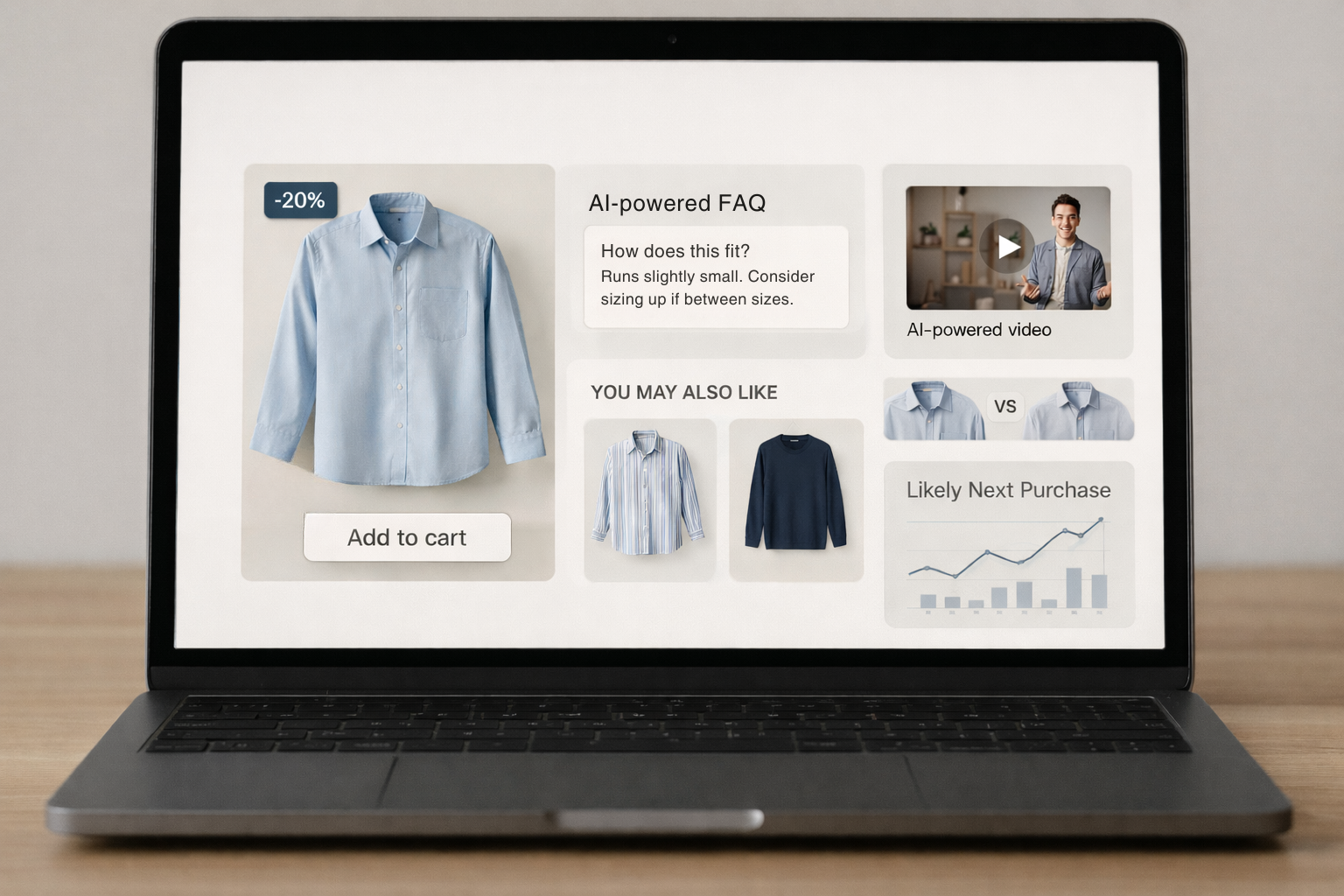

Product detail pages are no longer just the final step before checkout. In today’s retail environment, PDPs are one of the richest sources of shopper intent data available. Every scroll, pause, click, question, and interaction reveals what shoppers are trying to figure out, and what they’re likely to want next.
For retail teams, the opportunity isn’t just to optimize PDPs for conversion. It’s to use PDP data as a predictive engine, one that surfaces demand signals early, informs content strategy, and shapes the next best experience for the shopper. Here’s how leading teams are doing it.
PDPs Are Where Intent Becomes Visible
Search and category browsing tell you what a shopper is looking for. PDP behavior tells you why. On PDPs, shoppers slow down and compare. They also hesitate and seek reassurance. This is where true intent shows up, not in keywords, but in behavior. How long someone spends on a PDP, which sections they engage with, and where they drop off all point to unmet needs.
A shopper who scrolls past specs but replays a demo video is signaling something very different from one who opens comparison charts or FAQs. PDP data captures these nuances in real time.
The Most Valuable PDP Signals to Watch
Not all PDP data is equally useful. The most predictive signals tend to come from engagement depth, not surface-level clicks.
Repeated video plays often indicate uncertainty or high consideration. Long dwell time on FAQs or installation content suggests friction or complexity. Frequent switching between product variants signals comparison fatigue. Quick exits after viewing price or shipping details often point to value or timing issues.
Individually, these actions seem small. Together, they form a clear picture of what the shopper is trying to solve, and what they may need next to move forward.
From Reactive Optimization to Predictive Insight
Most teams use PDP data reactively: identifying what’s broken and fixing it after conversion drops. Predictive teams flip that model.
Instead of asking, “Why didn’t this convert?” they ask, “What is this shopper telling us they need next?”
If shoppers consistently pause on content explaining durability, they’re likely prioritizing longevity. If they seek out size guides or fit videos, confidence is the blocker. If they bounce after scanning reviews, trust may be missing. These signals allow retailers to predict next actions, whether that’s surfacing comparison content, introducing an upsell, adjusting messaging, or personalizing follow-up experiences.
Why PDP Content Is Both the Signal and the Solution
PDP content plays a dual role. It’s not just what shoppers consume, it’s also how retailers learn.
Every interaction with PDP content generates insight. Which videos are watched? Which images are ignored? Which questions are repeatedly asked? Content performance becomes a diagnostic tool.
At the same time, content is how retailers respond to those signals. When PDP data shows shoppers repeatedly looking for explanations, the answer isn’t more copy, it’s clearer, faster, more visual content. When data shows high engagement with demos, it’s a signal to scale that content across similar products.
In this way, PDP content becomes a feedback loop: behavior informs content, and content shapes behavior.
Using PDP Data to Shape What Comes Next
Once retailers understand PDP intent signals, they can begin to predict and influence the next step in the journey.
For high-intent shoppers, that may mean surfacing complementary products or bundles. For hesitant shoppers, it may mean serving reassurance content, testimonials, comparisons, or short explainer videos. For early-stage shoppers, it may mean introducing educational content that reframes the decision altogether.
The key is timing. PDP data allows retailers to intervene before a shopper leaves, rather than relying on retargeting or email later.
The Role of AI in Turning PDP Data Into Action
The challenge with PDP data isn’t collection, its scale. Modern retail sites generate millions of micro-signals every day.
AI helps interpret these signals in real time, identifying patterns that human teams can’t track manually. It can recognize when a shopper is stuck, when they’re ready to upgrade, or when they’re likely to abandon, and trigger the appropriate content or guidance instantly.
This is where predictive commerce becomes practical, not theoretical. PDP data fuels the model. AI turns it into action.
Why Predictive PDPs Matter More Than Ever
Shoppers today are overwhelmed by choice and short on patience. They don’t want to hunt for answers or assemble information themselves. They expect retailers to understand their needs and guide them forward.
Retailers who treat PDPs as static endpoints miss this opportunity. Those who treat PDPs as dynamic, data-driven intelligence hubs gain a competitive advantage, not just in conversion, but in relevance.
The Storefront of the Future Is Already Here
PDP data is one of the most underutilized assets in retail. It reveals what shoppers care about, where they hesitate, and what they’re likely to want next, if teams know how to listen.
Learn more about how Firework combines PDP behavior data with adaptive content and AI-driven decisioning.
FAQ
What kind of PDP data is most useful for predicting shopper behavior?
Engagement signals like scroll depth, video interaction, time spent on key sections, comparison behavior, and exit patterns provide the strongest indicators of intent.
How does PDP data differ from general analytics data?
PDP data reflects high-intent behavior. Unlike traffic or campaign metrics, it shows how shoppers evaluate products and where uncertainty appears.
Can PDP data really predict future purchases?
Yes. When analyzed at scale, PDP behavior patterns can forecast upsell opportunities, content needs, and likelihood to convert or return.
What role does content play in predictive PDP strategies?
Content is the execution layer. PDP data tells you what shoppers need; content delivers it in the format that builds confidence and drives action.
Is AI required to use PDP data predictively?
While basic insights can be extracted manually, AI enables real-time analysis, pattern recognition, and dynamic content adaptation at scale.
Unlock Exclusive Insights
By submitting this form, you agree to Firework's privacy policy and consent to receive personalized marketing communications. You can unsubscribe at any time.











.png)